
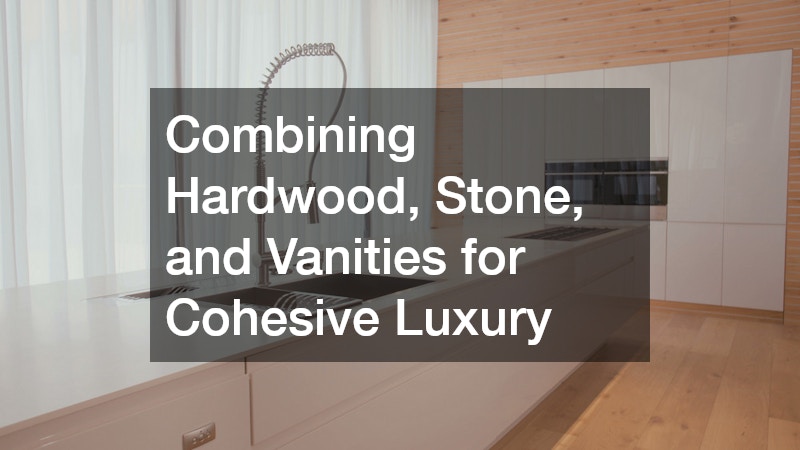
Creating a home that feels luxurious does not happen by accident. It comes from thoughtful choices about materials and how they work together, from the floor beneath your feet to the surfaces you touch every day. Many homeowners invest in beautiful individual features only to find the overall look feels disjointed rather than cohesive. This article walks through how hardwood, stone, and vanities, along with the outdoor spaces that extend your living area, can be planned together for a unified, high-end result.
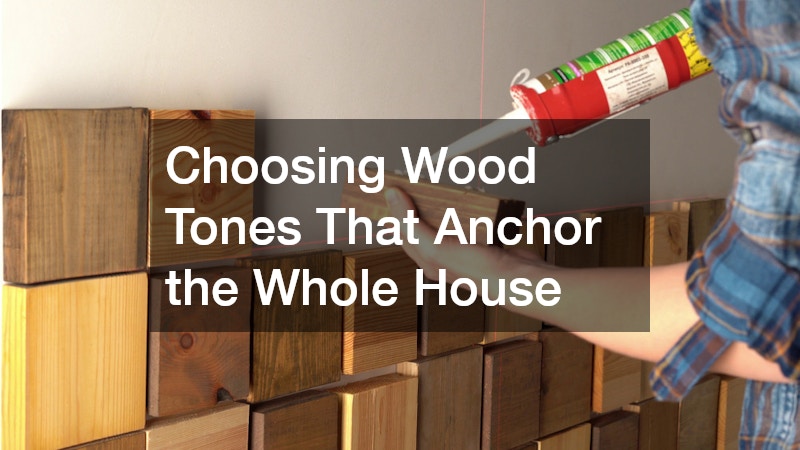
Choosing Wood Tones That Anchor the Whole House
The foundation of a cohesive interior often starts with your flooring, since it touches nearly every room and sets the color temperature for everything else. Warm honey tones, cool grays, and deep espresso finishes each send a different design signal, so picking one direction and carrying it through adjoining spaces prevents a choppy transition between rooms. If you already have existing floors that feel dated or mismatched, hardwood floor refinishing is often a more affordable path to a unified look than ripping out and replacing everything.
Refinishing also gives you a chance to correct undertones that clash with newer stone or cabinetry you plan to introduce later. A skilled finisher can adjust stain color, sheen level, and even add wire-brushed texture to modernize older planks. Sampling stain colors on your actual existing wood, in the actual room lighting, is the only reliable way to confirm the tone works with your broader palette.
- Test stain samples in both morning and evening light before committing
- Match sheen level across connected rooms for visual consistency
- Consider the undertone of nearby stone or tile before finalizing a wood color
- Ask about water-based finishes if you want a lighter, more contemporary tone
Selecting Stone Surfaces That Complement Your Flooring
Stone countertops, backsplashes, and accent walls introduce texture and movement that wood alone cannot provide, but only when the veining and color family are chosen with the floor in mind. A busy, high-contrast granite can visually fight with a rich walnut floor, while a quieter quartzite or soapstone often lets both materials shine. Bringing a physical flooring sample to the stone yard, rather than relying on memory or photos, makes an enormous difference in avoiding costly mismatches.
Natural stone also varies significantly between slabs, so seeing the actual piece being cut for your project is worth the extra time. If your home has warm-toned hardwood, look for stone with complementary beige, cream, or soft gold flecking rather than stark white or cool gray, unless you are intentionally creating contrast as a design statement.
- Bring a wood flooring sample when shopping for slabs
- View full slabs in natural light, not just small chips
- Decide early whether you want contrast or a blended, monochromatic look
- Ask suppliers about slab variation between batches
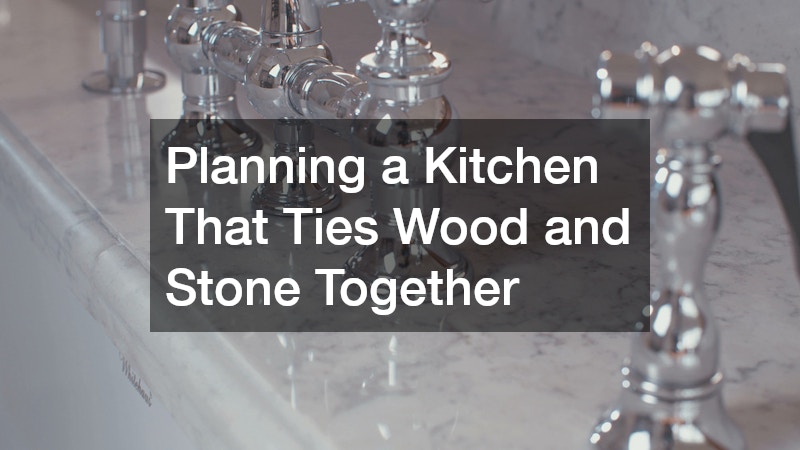
Planning a Kitchen That Ties Wood and Stone Together
The kitchen is usually where hardwood and stone meet most directly, making it the room where cohesive planning matters most. A kitchen renovation gives you the opportunity to coordinate cabinetry, countertops, and flooring as one connected system rather than choosing each element in isolation. Working from a single mood board or sample board during the planning phase helps prevent the common mistake of selecting beautiful materials that simply do not belong together.
Layout also plays a role in how cohesive the space feels. Open-concept kitchens that flow into living areas benefit from continuous flooring, since a hard transition line between two different wood species can make the whole home feel fragmented. If your renovation includes an island with a contrasting stone top, echo that same stone somewhere else in the kitchen, such as a backsplash accent, so the eye reads it as intentional rather than random.
- Build a sample board with flooring, countertop, and cabinet finishes together
- Keep flooring consistent through open sightlines into adjacent rooms
- Repeat any accent stone in at least two places for visual balance
- Choose cabinet hardware finishes that echo metals used elsewhere in the home
Designing a Bathroom Vanity That Feels Custom-Built
The vanity is often the single most noticed feature in a bathroom, so it deserves the same material coordination given to kitchens. A well-chosen bathroom vanity pairs a stone or solid-surface top with a cabinet finish that either matches or intentionally complements the wood tones found elsewhere in the home. Floating vanities in a light oak finish tend to pair beautifully with a marble or quartz top, creating a spa-like feel without appearing sterile.
Storage needs matter just as much as style when selecting a vanity, particularly in shared or family bathrooms. Drawer configuration, counter depth, and sink style should all be decided before finalizing the stone top, since custom cutouts are far easier to plan in advance than to modify after installation. Take time to consider how the vanity will look alongside existing tile or flooring rather than treating it as an isolated purchase.
- Match or intentionally contrast vanity wood tone with nearby flooring
- Choose sink style, faucet holes, and counter depth before ordering stone
- Consider double sinks and extra drawer storage for shared bathrooms
- Coordinate hardware finish with lighting fixtures in the same room
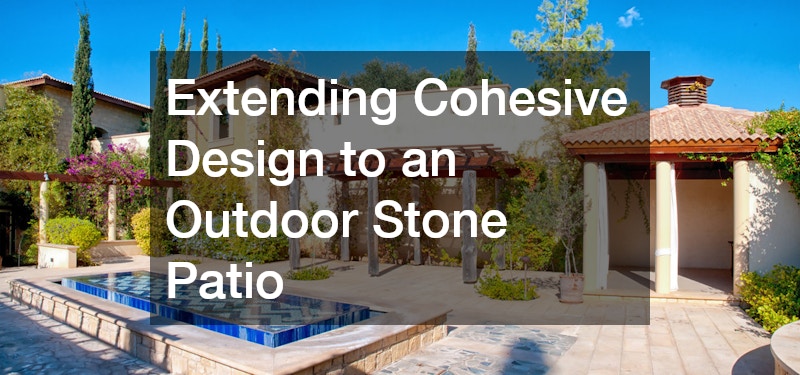
Extending Cohesive Design to an Outdoor Stone Patio
Luxury design does not have to stop at the back door. A well-planned stone patio can echo the same material language used inside the home, particularly when the same stone family or a close visual match is used for both indoor and outdoor surfaces. This kind of continuity makes a home feel larger and more intentional, since the transition from kitchen to backyard reads as one connected experience rather than two separate design decisions.
Durability matters more outdoors than indoors, so it is worth discussing sealed versus honed finishes with your installer before committing to a stone type. Some materials that look stunning inside can become slippery or prone to staining when exposed to weather, so choosing an outdoor-rated version of a similar color family is often the smarter move.
- Match outdoor stone color family to interior surfaces where possible
- Ask about slip resistance and sealing requirements for exterior use
- Consider how the patio stone will look next to any nearby wood decking
- Plan drainage and slope before installation to avoid water pooling
Framing Outdoor Living Areas With a Raised Deck
For homes on sloped lots or those wanting separation between different outdoor zones, a raised deck builder can create a wood-toned outdoor space that mirrors the warmth of interior hardwood. Composite and natural wood decking now come in tones specifically designed to coordinate with popular interior flooring colors, making it easier than ever to create a visual bridge between indoors and out. A raised deck also opens up views and airflow that a ground-level patio cannot always provide.
Railings, stair details, and built-in lighting should be considered alongside the decking material itself, since these details contribute significantly to the overall finished look. A deck that ties into the home’s existing color palette, rather than standing apart from it, reinforces the cohesive design theme running through the rest of the property.
- Choose decking tones that echo interior hardwood where visible together
- Consider composite materials for lower maintenance in harsh climates
- Plan railing style to match or complement other metal finishes on the property
- Add built-in lighting for both safety and ambiance on multi-level decks
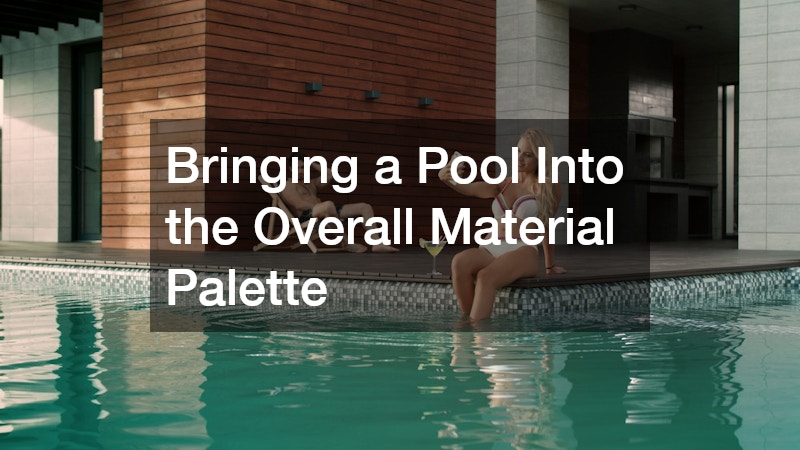
Bringing a Pool Into the Overall Material Palette
A backyard pool is a major investment, and thoughtful pool design services can ensure the finished feature complements rather than competes with the rest of your property’s materials. Coping stone, decking material, and even the color of the pool interior finish should be selected with the home’s existing palette in mind, not chosen as a standalone decision. Experienced pool builders can walk you through how different coping stones will look alongside existing outdoor surfaces, helping avoid a jarring visual break between the house and yard.
Shape and placement also affect how well a pool integrates with the rest of the outdoor design. A rectangular pool often suits a modern home with clean architectural lines, while a freeform shape can feel more natural next to established landscaping and organic plantings. Discussing these choices early in the planning process, rather than after construction begins, gives you far more flexibility to create a unified look.
- Match pool coping stone to existing outdoor hardscape materials
- Choose a pool shape that aligns with the home’s architectural style
- Coordinate pool decking color with nearby stone or wood surfaces
- Discuss interior pool finish color, since it affects perceived water tone
Rounding Out the Backyard With a Hot Tub and Fencing
A hot tub installation can serve as a natural focal point when its surrounding materials are chosen to match the rest of the outdoor palette. Built-in models set into a stone patio or wood deck tend to feel more integrated than a freestanding unit dropped into an unrelated corner of the yard. Coordinating the hot tub’s shell color and any surrounding decking or stonework helps it read as a planned feature rather than an afterthought.
Privacy and boundary features also contribute to the overall cohesive feel of a backyard. Choosing a fence style and wood tone that complements the stone patio or deck helps the entire perimeter feel like part of one unified design rather than a mismatched add-on. Experienced fence contractors can help match materials and stain tones to your existing hardscape, ensuring the boundary feels custom rather than off-the-shelf. A well-matched fence line frames the outdoor space and helps unify everything from the pool area to the raised deck into one connected design.
- Choose hot tub shell color to coordinate with surrounding stone or wood
- Set hot tubs into decking or a stone patio for a built-in, integrated look
- Select fence material and stain to match or complement the stone patio and deck tones
- Use consistent post caps or hardware finishes across fencing and decking
Protecting Your Investment With Routine Maintenance
Even the most beautifully coordinated materials will lose their appeal without consistent upkeep, so a maintenance plan should be part of your overall design strategy from the start. Hardwood floors need periodic resealing every one to three years depending on foot traffic, while natural stone surfaces benefit from a fresh sealant coat roughly once a year to resist etching, staining, and moisture penetration.
If your outdoor living space includes a pool, that adds another layer to the maintenance equation. Reliable pool cleaning services keep water clear and chemically balanced, which also protects surrounding coping stone and decking from mineral buildup, calcium scaling, and staining over time. Untreated water can leach into porous stone surfaces, leaving behind cloudy white deposits that are far harder to remove than they are to prevent.
Vanities deserve their own routine attention as well, particularly around faucet bases and backsplashes where water tends to pool. Wiping down stone or quartz countertops daily and checking caulk lines every few months can prevent slow leaks from warping nearby hardwood flooring.
Neglecting this kind of routine care can quietly undo years of careful material planning. A simple seasonal checklist covering sealant checks, grout inspection, and scheduled pool cleaning services can help homeowners catch small issues before they become costly repairs.
Indoor materials need similar attention, particularly hardwood floors that see daily foot traffic near kitchens and entryways. Most hardwood benefits from refinishing every 7 to 10 years, though high-traffic zones may need a light screen-and-recoat every 3 to 5 years to keep the protective finish intact. Spills should be wiped up immediately, since standing water or acidic liquids like wine and citrus juice can warp planks or dull the finish within hours.
Simple habits go a long way toward preventing costly repairs. Felt furniture pads guard against scratches from chair legs and table bases, while area rugs in entryways trap grit before it can grind into the wood. Maintaining indoor humidity between 35 and 55 percent also helps prevent the gaps and cupping that come with seasonal expansion and contraction.
Stone and vanity surfaces deserve their own routine as well. Natural stone countertops should be resealed annually, or every six months for softer stones like marble or limestone, and cleaned only with pH-neutral products to avoid etching. Cabinet hardware, hinges, and vanity plumbing connections are worth a quick inspection twice a year to catch loose fittings before they become leaks.
Setting a seasonal reminder for both indoor and outdoor maintenance tasks helps keep your entire home looking as intentional as the day it was finished.
- Schedule regular pool cleaning and balanced water chemistry to protect surrounding stone and decking from etching, staining, and efflorescence
- Reseal outdoor stone surfaces every one to three years depending on climate, with high-traffic or freeze-thaw regions needing more frequent attention
- Address hardwood scratches and dullness early with spot touch-ups or screen-and-recoat treatments before they require full refinishing
- Inspect deck boards, railings, and fencing annually for weather damage, focusing on loose fasteners, soft spots, and warping
- Clean vanity stone and grout lines with pH-neutral cleaners to avoid dulling polished finishes or eroding sealant
- Keep gutters and drainage clear near stone patios to prevent water pooling that accelerates surface deterioration
Cohesive luxury is less about spending the most money and more about making sure every material in your home speaks the same design language. When flooring, stone, vanities, and outdoor features are planned together instead of in isolation, the result feels intentional from the front door to the back fence. Start by identifying one anchor material, whether that is your existing hardwood or a stone you love, and build outward from there. Taking the time to coordinate these choices now will save you from costly mismatches later and give your home a polished, unified feel for years to come.